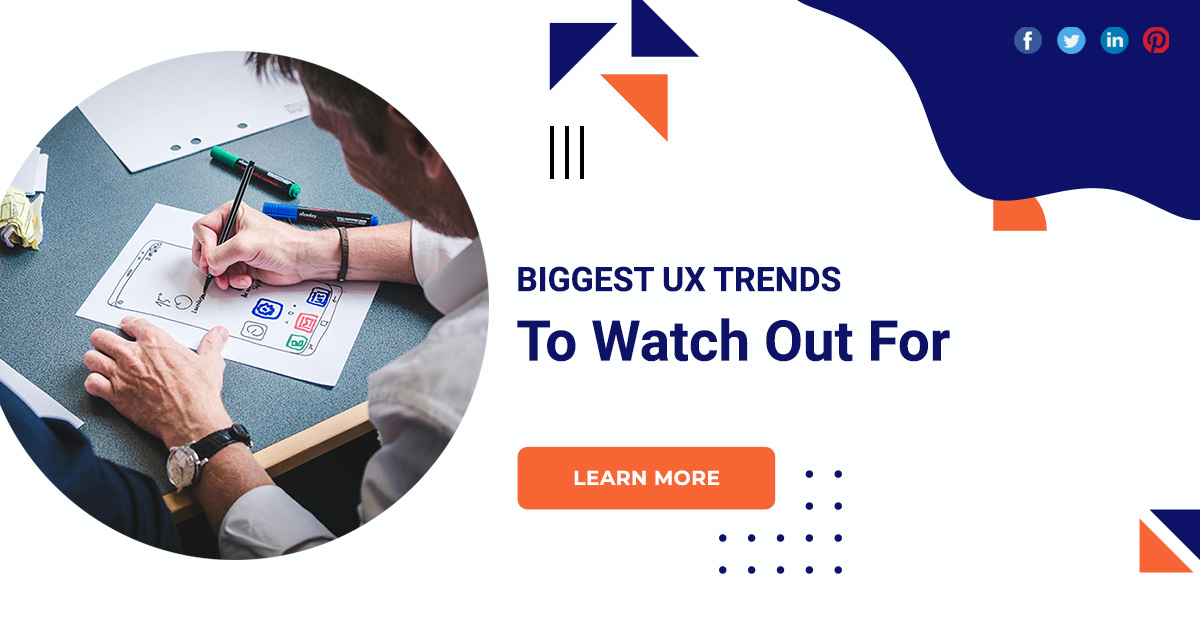
Biggest UX Trends To Watch Out For
With more time to think at home, UX trends designers from all over the world have a unique opportunity to come up with innovative products and redesign existing ones. This year, let’s compare ourselves and understand who we are as designers and what makes us tick.
Biggest UX trends
Login without a password
The average user uses at least 30 apps a month, so remembering every password is quite a chore. The password is often required to be a combination of numbers, special characters and letters, making it difficult to remember. Biometric authentication is one technology that can include a security-first approach for both businesses and users, thereby significantly improving the user experience. The promising market for biometric authentication is to provide people with an identity without the threat of being impersonated.
Scrollytelling
Scrolling is an interaction of the past apps and websites are quickly moving towards the scrolytelling idea. In this environment, the user sees every element on the page come to life through micro-interactions and creative storytelling through scrolling down. There are no clicks, no selection hassles and no pop-ups.

Air gesture control
Air Gesture Control is a touchless mechanism that allows users to control their devices with body gestures and air movements. Motions such as waving, pinching, opening palms, sliding or flicking can all be used to initiate different actions. The Google Pixel 4 features a motion-sensing radar that facilitates many of these touchless interactions, making it a one-of-a-kind device.
Material design and designing for larger screens
Companies like Google have begun to adapt and optimize their design systems to respond to these new demands. This will have a ripple effect across the industry with more competitors looking to jump on the bandwagon and compete with Material Design based apps. The rise in popularity of foldable devices and tablets will mean more designs for all form factors and the ability to respond to layouts and components across devices.
Advanced personalization
Advanced personalization uses emotive and sensory design to fine-tune technology for each individual user’s needs and desires. Not only from a user experience perspective, but when users see personalized options, they are more likely to convert.
Conclusion
Now that we’ve looked at some of the UX trends that this will bring us, it’s also a good time to talk about how UX design will become more and more specialized in the coming years.



 Arizona
 Dubai
Dubai India
India