

Agile Software Development Lifecycle Phases Explained
It has become a tradition for agile followers in various industries and disciplines to study data, track statistics and compare the dynamics of the development of this flexible method of collaboration. We reviewed this report because we at Relevant also use an agile methodology to deliver software.
Agile software development lifecycle
Agile
Every modern organization must respond quickly to changing market trends driven by strong competition and dynamic customer demands. And it is Agile that changes the paradigm of how companies operate in the digital world.
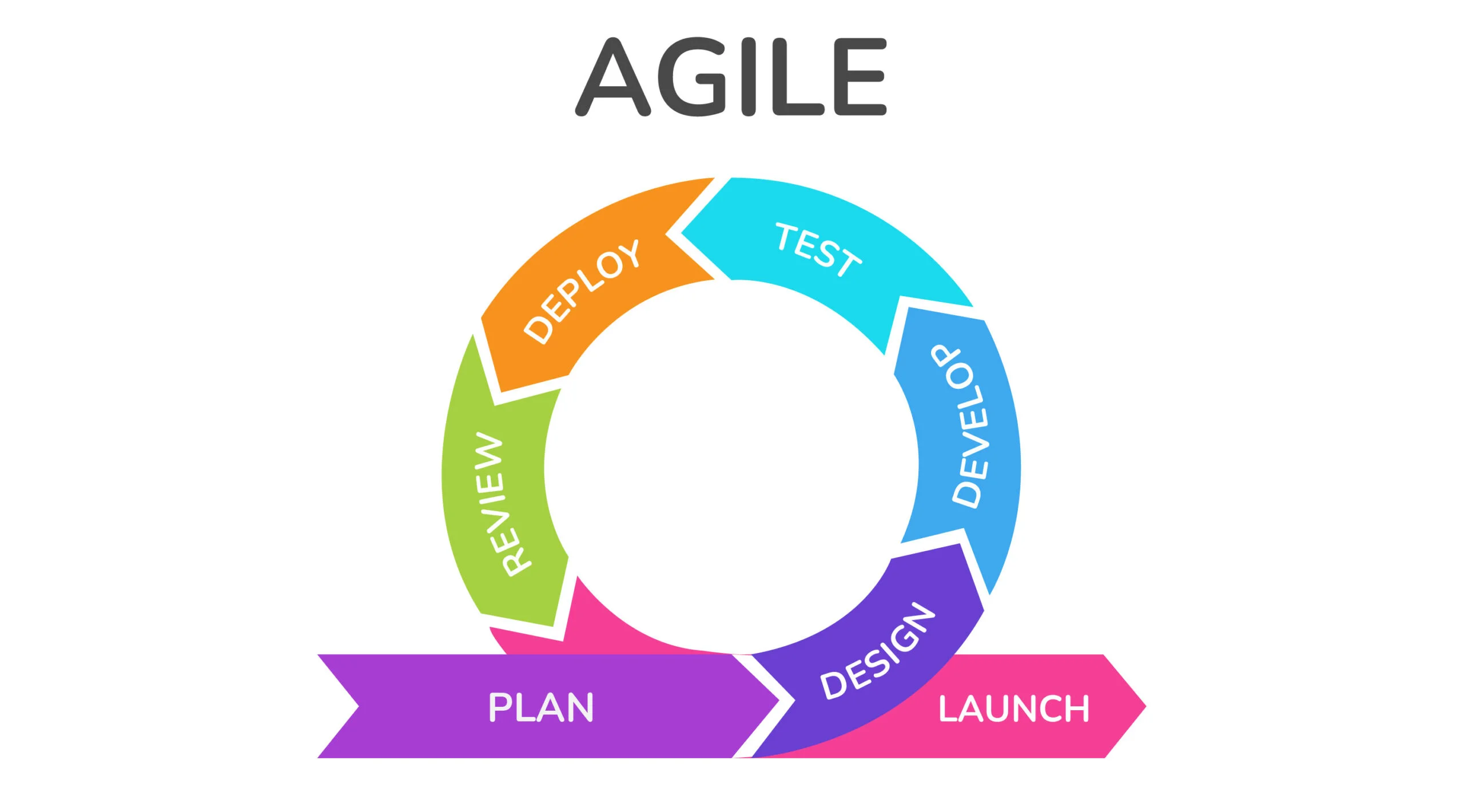
What is meant by Agile SDLC?
The Agile SDLC methodology is based on collaborative decision-making between teams and a cyclical, iterative process of creating working software. The work is done in regularly recurring sprints, which usually last several weeks. The Agile SDLC model emphasizes process adaptability and customer satisfaction through rapid delivery of a functional software product.
Key agile software development lifecycle phases
Requirements
The time and resources required for the development process. In the same phase, the owner assesses the risks and prioritizes different features depending on their business value.
Design
The software owner meets with the software development team and briefs them on the requirements outlined in step one. The group then discusses the sequence for introducing features and identifies the essential tools, the programming language, syntax libraries, and basic frameworks.
Development and coding
After agreeing the plan with the customer, the team develops the product itself. The initial version is likely to undergo many changes to provide improved features and new features.
Integration and testing
At this point, the product is available to consumers, so the team has to run a series of tests to make sure the software is fully functional. If potential bugs or flaws are found, the developers will fix them immediately.
Implementation and deployment
The software is now fully deployed and available to customers. This action will put it into the maintenance phase. During this phase, the software development team provides ongoing support to keep the system running smoothly and fix any new bugs.
Assessment
After the completion of all previous stages of development, the development team presents the result achieved in meeting the requirements to the owner. After that, the Agile software development phases begin again either with a new iteration or moving to the next phase and scaling Agile.
Agile techniques and tools
All software development methodologies are classified as adaptive and predictive. Agile SDLC is part of the adaptive subcategory, while V-shape, waterfall, iteration and spiral models are part of the predictive approach.
Conclusion
Agile workflow helps teams cope with unexpected scenarios while proactively promoting business values and increasing productivity through collaboration and understanding of specific needs and roles.





 Arizona
 Dubai
Dubai India
India